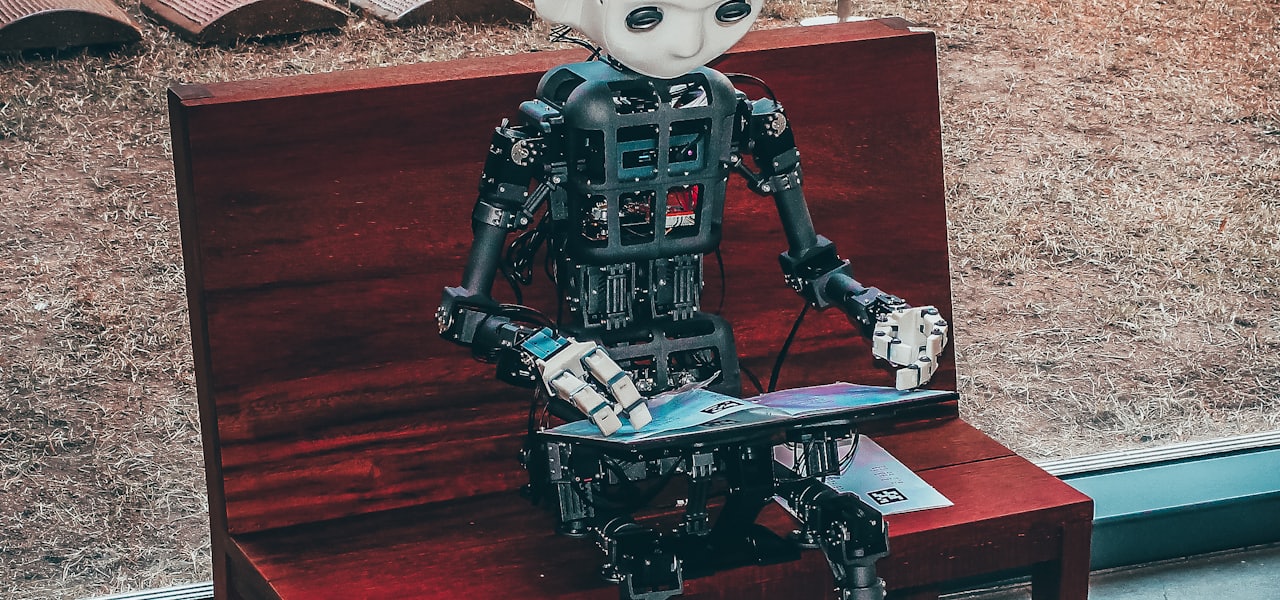
Artificial intelligence (AI) is the capability of computational systems to perform tasks typically associated with human intelligence, such as learning, reasoning, problem-solving, perception, and decision-making. It is a field of research in engineering, mathematics and computer science that develops and studies methods and software that enable machines to perceive their environment and use learning and intelligence to take actions that maximize their chances of achieving defined goals. High-profile applications of AI include advanced web search engines, chatbots, virtual assistants, autonomous vehicles, and play and analysis in strategy games (e.g., chess and Go). Since the 2020s, generative AI has become widely available to generate images, audio, and videos from text prompts. The traditional goals of AI research include learning, reasoning, knowledge representation, planning, natural language processing, and perception, as well as support for robotics. To reach these goals, AI researchers have used techniques including state space search and mathematical optimization, formal logic, artificial neural networks, and methods based on statistics, operations research, and economics. AI also draws upon psychology, linguistics, philosophy, neuroscience, and other fields. Some companies, such as OpenAI, Google DeepMind and Meta, aim to create artificial general intelligence (AGI) – AI that can complete virtually any cognitive task at least as well as a human. Artificial intelligence was founded as an academic discipline in 1956, and the field went through multiple cycles of optimism throughout its history, followed by periods of disappointment and loss of funding, known as AI winters. Funding and interest increased substantially after 2012, when graphics processing units began being used to accelerate neural networks, and deep learning outperformed previous AI techniques. This growth accelerated further after 2017 with the transformer architecture. In the 2020s, an AI boom has coincided with advances in generative AI, which allowed for the creation and modification of media. In addition to AI safety and unintended consequences and harms from the use of AI, ethical concerns, AI's long-term effects, and potential existential risks have prompted discussions of AI regulation. == Goals == The general problem of simulating (or creating) intelligence has been broken into subproblems. These consist of particular traits or capabilities that researchers expect an intelligent system to display. The traits described below have received the most attention and cover the scope of AI research. === Reasoning and problem-solving === Early researchers developed algorithms that imitated step-by-step reasoning that humans use when they solve puzzles or make logical deductions. By the late 1980s and 1990s, methods were developed for dealing with uncertain or incomplete information, employing concepts from probability and economics. Many of these algorithms are insufficient for solving large reasoning problems because they experience a "combinatorial explosion": They become exponentially slower as the problems grow. Even humans rarely use the step-by-step deduction that early AI research could model. They solve most of their problems using fast, intuitive judgments. Accurate and efficient reasoning is an unsolved problem. === Knowledge representation === Knowledge representation and knowledge engineering allow AI programs to answer questions intelligently and make deductions about real-world facts. Formal knowledge representations are used in content-based indexing and retrieval, scene interpretation, clinical decision support, knowledge discovery (mining "interesting" and actionable inferences from large databases), and other areas. A knowledge base is a body of knowledge represented in a form that can be used by a program. An ontology is the set of objects, relations, concepts, and properties used by a particular domain of knowledge. Knowledge bases need to represent things such as objects, properties, categories, and relations between objects; situations, events, states, and time; causes and effects; knowledge about knowledge (what we know about what other people know); default reasoning (things that humans assume are true until they are told differently and will remain true even when other facts are changing); and many other aspects and domains of knowledge. Among the most difficult problems in knowledge representation are the breadth of commonsense knowledge (the set of atomic facts that the average person knows is enormous); and the sub-symbolic form of most commonsense knowledge (much of what people know is not represented as "facts" or "statements" that they could express verbally). There is also the difficulty of knowledge acquisition, the problem of obtaining knowledge for AI applications. === Planning and decision-making === An "agent" is any entity (artificial or not) that perceives and takes actions in the world. A rational agent has goals or preferences and takes actions to make them happen. In automated planning, the agent has a specific goal. In automated decision-making, the agent has preferences—there are some situations it would prefer to be in, and some situations it is trying to avoid. The decision-making agent assigns a number to each situation (called the "utility") that measures how much the agent prefers it. For each possible action, it can calculate the "expected utility": the utility of all possible outcomes of the action, weighted by the probability that the outcome will occur. It can then choose the action with the maximum expected utility. In classical planning, the agent knows exactly what the effect of any action will be. In most real-world problems, however, the agent may not be certain about the situation they are in (it is "unknown" or "unobservable") and it may not know for certain what will happen after each possible action (it is not "deterministic"). It must choose an action by making a probabilistic guess and then reassess the situation to see if the action worked. Alongside thorough testing and improvement based on previous decisions, having an explanation for why the agent took certain decisions is a way to build trust, especially when the decisions have to be relied upon. In some problems, the agent's preferences may be uncertain, especially if there are other agents or humans involved. These can be learned (e.g., with inverse reinforcement learning), or the agent can seek information to improve its preferences. Information value theory can be used to weigh the value of exploratory or experimental actions. The space of possible future actions and situations is typically intractably large, so the agents must take actions and evaluate situations while being uncertain of what the outcome will be. A Markov decision process has a transition model that describes the probability that a particular action will change the state in a particular way and a reward function that supplies the utility of each state and the cost of each action. A policy associates a decision with each possible state. The policy could be calculated (e.g., by iteration), be heuristic, or it can be learned. Game theory describes the rational behavior of multiple interacting agents and is used in AI programs that make decisions that involve other agents. === Learning === Machine learning is the study of programs that can improve their performance on a given task automatically. It has been a part of AI from the beginning. There are several kinds of machine learning. Unsupervised learning analyzes a stream of data and finds patterns and makes predictions without any other guidance. Supervised learning requires labeling the training data with the expected answers, and comes in two main varieties: classification (where the program must learn to predict what category the input belongs in) and regression (where the program must deduce a numeric function based on numeric input). In reinforcement learning, the agent is rewarded for good responses and punished for bad ones. The agent learns to choose responses that are classified as "good". Transfer learning is when the knowledge gained from one problem is applied to a new problem. Deep learning is a type of machine learning that runs inputs through biologically inspired artificial neural networks for all of these types of learning. Computational learning theory can assess learners by computational complexity, by sample complexity (how much data is required), or by other notions of optimization. === Natural language processing === Natural language processing (NLP) allows programs to read, write and communicate in human languages. Specific problems include speech recognition, speech synthesis, machine translation, information extraction, information retrieval and question answering. Early work, based on Noam Chomsky's generative grammar and semantic networks, had difficulty with word-sense disambiguation unless
List & Label
List & Label is a professional reporting tool for software developers. It provides comprehensive design, print and export functions. The software component runs on Microsoft Windows and can be implemented in desktop, cloud and web applications. List & Label can be used to create user-defined dashboards, lists, invoices, forms and labels. It supports many development environments, frameworks and programming languages such as Microsoft Visual Studio, Embarcadero RAD Studio, .NET Framework, .NET Core, ASP.NET, C++, Delphi, Java, C Sharp and some more. List & Label either retrieves data from various sources via data binding, or works database independent. Reports are designed and created in the so-called List & Label Designer and then exported into a multitude of formats like PDF, Excel, XHTML and RTF. Since version 27 a web report designer for ASP.NET MVC is available. == History == The product was first released in 1992 by combit. The current version is 30. A new major version of List & Label is released every fall, usually in October. Updates are available several times a year via Service Pack. == Features == === Report Designer === The Designer enables users to graphically layout the report. It offers report objects such as tables, charts, crosstabs, gauges, HTML, conditionally formatted text, barcodes, matrix codes, and graphics, and is extensible using third-party add-ons. User applications can interact with the report via the programmable object model of the report. The real-time preview functionality allows users to view changes instantly. Usability features include layer and appearance management, enabling conditional logic to dynamically control the visibility of objects in reports. The Designer also supports the inclusion of multiple report containers in a single project, accommodating complex layouts such as parallel tables and charts. A formula wizard and support for scripting languages such as C# facilitate advanced calculations and logic. The Designer's object model (DOM) provides developers with the ability to modify layouts and behaviors programmatically. === Web Report Designer === The web report designer works browser-based and independent from printer drivers and spoolers - that makes deployments to the cloud easier. Just like the use of the Visual Studio deployment pipeline. === Data Sources === Depending on the programming language, the product offers automatic support for data sources: Databases such as Microsoft SQL Server, Oracle, MySQL, PostgreSQL, IBM Db2, SQLite, MariaDB, MongoDB, Cosmos DB XML data, CSV Business objects Data sources that can be accessed via OLE DB, ODBC or ADO.NET LINQ data and data from web services GraphQL Additionally, the product offers support for unbound data and can be extended to support other data sources via interfaces. === Output Options === Printer Image Formats (JPEG, BMP, EMF, TIFF, PNG, SVG, HEIF, WebP) Document Formats: PDF, PDF/A, Word (DOCX), Excel (XLS), PowerPoint (PPTX) HTML, XHTML, MHTML Barcodes Plain Text, RTF, CSV, JSON XML, ZIP, Email, JSON List & Label preview file === Target Audience === List & Label can be used in Windows development environments. While it competes most notably on the Microsoft .NET platform with other products such as Crystal Reports, SQL Server Reporting Services, ActiveReports, there are few competing products for other programming languages (e.g. Progress, Alaska Xbase++, Visual DataFlex). == Awards == Reader's Choice Award 2005–2008 Stevie Awards 2021: Best Technology for Data Visualization Top 100 Publisher Award Component Source 2013-2014, 2014-2015,2016, 2018, 2019, 2020, 2021, 2022
Text simplification
Text simplification is an aspect of natural language processing that involves modifying, organizing, or categorizing existing text to make it easier to understand while retaining its original meaning. This process is essential in today's world, where communication is increasingly complex due to advancements in science, technology, and media. Human languages are inherently intricate, with extensive vocabularies and complex structures that can be challenging for machines to handle efficiently. Researchers have found that semantic compression techniques can help streamline and simplify text by reducing linguistic diversity and simplifying the vocabulary used in a given context. == Example == Text simplification involves modifying complex sentences into simpler ones to enhance readability and comprehension. Siddharthan (2006) provides an example to illustrate this process. The original sentence contains multiple clauses and phrases, which can be broken down into simpler sentences for better understanding. Also contributing to the firmness in copper, the analyst noted, was a report by Chicago purchasing agents, which precedes the full purchasing agents report that is due out today and gives an indication of what the full report might hold. Also contributing to the firmness in copper, the analyst noted, was a report by Chicago purchasing agents. The Chicago report precedes the full purchasing agents report. The Chicago report gives an indication of what the full report might hold. The full report is due out today. An approach to text simplification involves lexical simplification via lexical substitution, a process that replaces complex words with simpler synonyms. Identifying complex words is a challenge addressed by machine learning classifiers trained on labeled data. Researchers have found that asking labelers to sort words by complexity levels yields more consistent results than the traditional method of categorizing words as simple or complex.
Point-set registration
In computer vision, pattern recognition, and robotics, point-set registration, also known as point-cloud registration or scan matching, is the process of finding a spatial transformation (e.g., scaling, rotation and translation) that aligns two point clouds. The purpose of finding such a transformation includes merging multiple data sets into a globally consistent model (or coordinate frame), and mapping a new measurement to a known data set to identify features or to estimate its pose. Raw 3D point cloud data are typically obtained from Lidars and RGB-D cameras. 3D point clouds can also be generated from computer vision algorithms such as triangulation, bundle adjustment, and more recently, monocular image depth estimation using deep learning. For 2D point set registration used in image processing and feature-based image registration, a point set may be 2D pixel coordinates obtained by feature extraction from an image, for example corner detection. Point cloud registration has extensive applications in autonomous driving, motion estimation and 3D reconstruction, object detection and pose estimation, robotic manipulation, simultaneous localization and mapping (SLAM), panorama stitching, virtual and augmented reality, and medical imaging. As a special case, registration of two point sets that only differ by a 3D rotation (i.e., there is no scaling and translation), is called the Wahba Problem and also related to the orthogonal procrustes problem. == Formulation == The problem may be summarized as follows: Let { M , S } {\displaystyle \lbrace {\mathcal {M}},{\mathcal {S}}\rbrace } be two finite size point sets in a finite-dimensional real vector space R d {\displaystyle \mathbb {R} ^{d}} , which contain M {\displaystyle M} and N {\displaystyle N} points respectively (e.g., d = 3 {\displaystyle d=3} recovers the typical case of when M {\displaystyle {\mathcal {M}}} and S {\displaystyle {\mathcal {S}}} are 3D point sets). The problem is to find a transformation to be applied to the moving "model" point set M {\displaystyle {\mathcal {M}}} such that the difference (typically defined in the sense of point-wise Euclidean distance) between M {\displaystyle {\mathcal {M}}} and the static "scene" set S {\displaystyle {\mathcal {S}}} is minimized. In other words, a mapping from R d {\displaystyle \mathbb {R} ^{d}} to R d {\displaystyle \mathbb {R} ^{d}} is desired which yields the best alignment between the transformed "model" set and the "scene" set. The mapping may consist of a rigid or non-rigid transformation. The transformation model may be written as T {\displaystyle T} , using which the transformed, registered model point set is: The output of a point set registration algorithm is therefore the optimal transformation T ⋆ {\displaystyle T^{\star }} such that M {\displaystyle {\mathcal {M}}} is best aligned to S {\displaystyle {\mathcal {S}}} , according to some defined notion of distance function dist ( ⋅ , ⋅ ) {\displaystyle \operatorname {dist} (\cdot ,\cdot )} : where T {\displaystyle {\mathcal {T}}} is used to denote the set of all possible transformations that the optimization tries to search for. The most popular choice of the distance function is to take the square of the Euclidean distance for every pair of points: where ‖ ⋅ ‖ 2 {\displaystyle \|\cdot \|_{2}} denotes the vector 2-norm, s m {\displaystyle s_{m}} is the corresponding point in set S {\displaystyle {\mathcal {S}}} that attains the shortest distance to a given point m {\displaystyle m} in set M {\displaystyle {\mathcal {M}}} after transformation. Minimizing such a function in rigid registration is equivalent to solving a least squares problem. == Types of algorithms == When the correspondences (i.e., s m ↔ m {\displaystyle s_{m}\leftrightarrow m} ) are given before the optimization, for example, using feature matching techniques, then the optimization only needs to estimate the transformation. This type of registration is called correspondence-based registration. On the other hand, if the correspondences are unknown, then the optimization is required to jointly find out the correspondences and transformation together. This type of registration is called simultaneous pose and correspondence registration. === Rigid registration === Given two point sets, rigid registration yields a rigid transformation which maps one point set to the other. A rigid transformation is defined as a transformation that does not change the distance between any two points. Typically such a transformation consists of translation and rotation. In rare cases, the point set may also be mirrored. In robotics and computer vision, rigid registration has the most applications. === Non-rigid registration === Given two point sets, non-rigid registration yields a non-rigid transformation which maps one point set to the other. Non-rigid transformations include affine transformations such as scaling and shear mapping. However, in the context of point set registration, non-rigid registration typically involves nonlinear transformation. If the eigenmodes of variation of the point set are known, the nonlinear transformation may be parametrized by the eigenvalues. A nonlinear transformation may also be parametrized as a thin plate spline. === Other types === Some approaches to point set registration use algorithms that solve the more general graph matching problem. However, the computational complexity of such methods tend to be high and they are limited to rigid registrations. In this article, we will only consider algorithms for rigid registration, where the transformation is assumed to contain 3D rotations and translations (possibly also including a uniform scaling). The PCL (Point Cloud Library) is an open-source framework for n-dimensional point cloud and 3D geometry processing. It includes several point registration algorithms. == Correspondence-based registration == Correspondence-based methods assume the putative correspondences m ↔ s m {\displaystyle m\leftrightarrow s_{m}} are given for every point m ∈ M {\displaystyle m\in {\mathcal {M}}} . Therefore, we arrive at a setting where both point sets M {\displaystyle {\mathcal {M}}} and S {\displaystyle {\mathcal {S}}} have N {\displaystyle N} points and the correspondences m i ↔ s i , i = 1 , … , N {\displaystyle m_{i}\leftrightarrow s_{i},i=1,\dots ,N} are given. === Outlier-free registration === In the simplest case, one can assume that all the correspondences are correct, meaning that the points m i , s i ∈ R 3 {\displaystyle m_{i},s_{i}\in \mathbb {R} ^{3}} are generated as follows:where l > 0 {\displaystyle l>0} is a uniform scaling factor (in many cases l = 1 {\displaystyle l=1} is assumed), R ∈ SO ( 3 ) {\displaystyle R\in {\text{SO}}(3)} is a proper 3D rotation matrix ( SO ( d ) {\displaystyle {\text{SO}}(d)} is the special orthogonal group of degree d {\displaystyle d} ), t ∈ R 3 {\displaystyle t\in \mathbb {R} ^{3}} is a 3D translation vector and ϵ i ∈ R 3 {\displaystyle \epsilon _{i}\in \mathbb {R} ^{3}} models the unknown additive noise (e.g., Gaussian noise). Specifically, if the noise ϵ i {\displaystyle \epsilon _{i}} is assumed to follow a zero-mean isotropic Gaussian distribution with standard deviation σ i {\displaystyle \sigma _{i}} , i.e., ϵ i ∼ N ( 0 , σ i 2 I 3 ) {\displaystyle \epsilon _{i}\sim {\mathcal {N}}(0,\sigma _{i}^{2}I_{3})} , then the following optimization can be shown to yield the maximum likelihood estimate for the unknown scale, rotation and translation:Note that when the scaling factor is 1 and the translation vector is zero, then the optimization recovers the formulation of the Wahba problem. Despite the non-convexity of the optimization (cb.2) due to non-convexity of the set SO ( 3 ) {\displaystyle {\text{SO}}(3)} , seminal work by Berthold K.P. Horn showed that (cb.2) actually admits a closed-form solution, by decoupling the estimation of scale, rotation and translation. Similar results were discovered by Arun et al. In addition, in order to find a unique transformation ( l , R , t ) {\displaystyle (l,R,t)} , at least N = 3 {\displaystyle N=3} non-collinear points in each point set are required. More recently, Briales and Gonzalez-Jimenez have developed a semidefinite relaxation using Lagrangian duality, for the case where the model set M {\displaystyle {\mathcal {M}}} contains different 3D primitives such as points, lines and planes (which is the case when the model M {\displaystyle {\mathcal {M}}} is a 3D mesh). Interestingly, the semidefinite relaxation is empirically tight, i.e., a certifiably globally optimal solution can be extracted from the solution of the semidefinite relaxation. === Robust registration === The least squares formulation (cb.2) is known to perform arbitrarily badly in the presence of outliers. An outlier correspondence is a pair of measurements s i ↔ m i {\displaystyle s_{i}\leftrightarrow m_{i}} that departs from the generative model (cb.1). In this case, one can consider a differen
Brill tagger
The Brill tagger is an inductive method for part-of-speech tagging. It was described and invented by Eric Brill in his 1993 PhD thesis. It can be summarized as an "error-driven transformation-based tagger". It is: a form of supervised learning, which aims to minimize error; and, a transformation-based process, in the sense that a tag is assigned to each word and changed using a set of predefined rules. In the transformation process, if the word is known, it first assigns the most frequent tag, or if the word is unknown, it naively assigns the tag "noun" to it. High accuracy is eventually achieved by applying these rules iteratively and changing the incorrect tags. This approach ensures that valuable information such as the morphosyntactic construction of words is employed in an automatic tagging process. == Algorithm == The algorithm starts with initialization, which is the assignment of tags based on their probability for each word (for example, "dog" is more often a noun than a verb). Then "patches" are determined via rules that correct (probable) tagging errors made in the initialization phase: Initialization: Known words (in vocabulary): assigning the most frequent tag associated to a form of the word Unknown word == Rules and processing == The input text is first tokenized, or broken into words. Typically in natural language processing, contractions such as "'s", "n't", and the like are considered separate word tokens, as are punctuation marks. A dictionary and some morphological rules then provide an initial tag for each word token. For example, a simple lookup would reveal that "dog" may be a noun or a verb (the most frequent tag is simply chosen), while an unknown word will be assigned some tag(s) based on capitalization, various prefix or suffix strings, etc. (such morphological analyses, which Brill calls Lexical Rules, may vary between implementations). After all word tokens have (provisional) tags, contextual rules apply iteratively, to correct the tags by examining small amounts of context. This is where the Brill method differs from other part of speech tagging methods such as those using Hidden Markov Models. Rules are reapplied repeatedly, until a threshold is reached, or no more rules can apply. Brill rules are of the general form: tag1 → tag2 IF Condition where the Condition tests the preceding and/or following word tokens, or their tags (the notation for such rules differs between implementations). For example, in Brill's notation: IN NN WDPREVTAG DT while would change the tag of a word from IN (preposition) to NN (common noun), if the preceding word's tag is DT (determiner) and the word itself is "while". This covers cases like "all the while" or "in a while", where "while" should be tagged as a noun rather than its more common use as a conjunction (many rules are more general). Rules should only operate if the tag being changed is also known to be permissible, for the word in question or in principle (for example, most adjectives in English can also be used as nouns). Rules of this kind can be implemented by simple Finite-state machines. See Part of speech tagging for more general information including descriptions of the Penn Treebank and other sets of tags. Typical Brill taggers use a few hundred rules, which may be developed by linguistic intuition or by machine learning on a pre-tagged corpus. == Code == Brill's code pages at Johns Hopkins University are no longer on the web. An archived version of a mirror of the Brill tagger at its latest version as it was available at Plymouth Tech can be found on Archive.org. The software uses the MIT License.
Friendica
Friendica (formerly Friendika, originally Mistpark) is a free and open-source software distributed social network. It forms one part of the Fediverse, an interconnected and decentralized network of independently operated servers. == Features == Friendica users can connect with others via their own Friendica server, but may also fully integrate contacts from other platforms including Diaspora, Pump.io, GNU social, email, Discourse and more recently ActivityPub (including Mastodon, Pleroma and Pixelfed) and Bluesky into their 'newsfeed'. In addition to these two way connections, users can also use Friendica as a publishing platform to post content to WordPress, Tumblr, Insanejournal and Libertree. Posting to Google+ was also supported until that service was shut down. In addition, RSS feeds can be ingested. Because users are distributed across many servers, their "addresses" consist of a username, the "@" symbol, and the domain name of the Friendica instance in the same manner email addresses are formed. Twitter support was available but was deprecated due to API changes under Elon Musk's leadership rendering it unusable. Most of the functionality from major microblogging and social networking platforms are available in Friendica; for example, tagging users and groups via "@ mentions"; direct messages; hashtags; photo albums; "likes"; "dislikes"; comments; and re-shares of publicly visible posts. Published items can be edited and updated across the network. Comprehensive settings for privacy and the public visibility of posts allow users to regulate who can read which contributions, or see specific information about the user. Users can also create multiple profiles, allowing different groups of people (such as friends, or work mates) to see a different profile entirely when viewing the same page. User accounts can be downloaded or deleted, and can be imported to a different Friendica server if so required. Public forums can be created under different accounts, which can be switched between if the accounts are registered with the same email address. == Development == There is no corporation behind Friendica. The developers work on a voluntary basis and the project is run informally; the platform itself is used for the communication between the developers. There are different forums within Friendica, such as "Friendica Developers" and "Friendica Support". The source code of Friendica is hosted on GitHub. == Installation == The developers aim to make installation of the software as simple as possible for technical laymen. They argue that decentralization on small servers is a key condition for the freedom of users and their self-determination. The difficulty level is similar to an installation of WordPress. However, the installing on shared hosting is sometimes difficult because of missing PHP5 modules. Some volunteers also run public servers so that newcomers can also avoid the installation of their own software. == List of clients == Friendica implements multiple client-server API variants simultaneously. Along with endpoints needed to use enhanced Friendica features, it also implements the API used by GNU social, Twitter and since version 2021.06 also the one used by Mastodon. As a result, most GNU social and Mastodon clients can be used for Friendica. Examples of Friendica compatible clients include: Raccoon for Friendica, Friendiqa, Fedilab, AndStatus, Twidere and DiCa for Android, friendly for Sailfish OS, friclicli (CLI client), choqok and Friendiqa for Linux and Friendica Mobile for Windows 10. == Reception == Friendica was cited in January 2012 by Infoshop News as an "alternative to Google+ and Facebook" to be used on the Occupy Nigeria movement. In January 2012 Free Software Foundation Europe's blog cited Friendica as a reasonable alternative to centralized and controlled social networks such as Facebook or Google+. Biblical Notes writer J. Randal Matheny described Friendica in January 2012 as "One social networking option flying under the radar until recently deserves consideration as an already stable platform with a wide range of options, applications, plug-ins, and possibilities for opening up the Internet." In February 2012, the German computer magazine c't wrote: "Friendica demonstrates how decentralized social networks can become widely accepted." Another German publication, the professional magazine t3n listed Friendica as a Facebook rival in an online article in March 2012 about Facebook alternatives. It compared Friendica with similar social networks like Diaspora and identi.ca. MSN Tech & Gadgets contributor Emma Boyes wrote about Friendica in May 2012: "why you'll love it: you can use it to access all the other social networks and get recommendations of new friends and groups to join. Friendica is open source and decentralised. There's no corporation behind it and there are extensive privacy settings. You can choose from a variety of user interfaces and it boasts some cool features—for instance, being able to key in a list of your interests and use the 'profile match' feature to recommend other users who share them with you. A word of warning, though, the site is not as user-friendly as the others on this list, so it may be this one is one for the geeks." == Later reviews == Acquisition of Twitter by Elon Musk had revitalized public interest in Fediverse technologies in April 2022. Friendica received favorable reviews, with a PCMag article describing it as "mostly comparable to Facebook", drawing a parallel to Google+ and highlighting using it "for planning events, and its multiple profile feature means you can show a different face to your friends, coworkers, and family". The September 2022 issue of Linux Magazine contains a detailed comparison and walk-through of registering to and using basic functions of Diaspora, Friendica and Mastodon. They describe Friendica as "intuitive" and highlight the "huge choice of account settings" and that "Friendica does not require any specific hardware, so you can use an old computer system as a server." == Vulnerabilities == In September 2020, a hotfix was released to patch a security vulnerability that could leak sensitive information from the server environment since versions released in April 2019 (develop branch) and June 2019 (stable).
Vicarious (company)
Vicarious was an artificial intelligence company based in the San Francisco Bay Area, California. They use the theorized computational principles of the brain to attempt to build software that can think and learn like a human. Vicarious describes its technology as "a turnkey robotics solution integrator using artificial intelligence to automate tasks too complex and versatile for traditional automations". Alphabet Inc acquired the company in 2022 for an undisclosed amount. == Founders == The company was founded in 2010 by D. Scott Phoenix and Dileep George. Before co-founding Vicarious, Phoenix was Entrepreneur in Residence at Founders Fund and CEO of Frogmetrics, a touchscreen analytics company he co-founded through the Y Combinator incubator program. Previously, George was Chief Technology Officer at Numenta, a company he co-founded with Jeff Hawkins and Donna Dubinsky while completing his PhD at Stanford University. == Funding == The company launched in February 2011 with funding from Founders Fund, Dustin Moskovitz, Adam D’Angelo (former Facebook CTO and co-founder of Quora), Felicis Ventures, and Palantir co-founder Joe Lonsdale. In August 2012, in its Series A round of funding, it raised an additional $15 million. The round was led by Good Ventures; Founders Fund, Open Field Capital and Zarco Investment Group also participated. The company received $40 million in its Series B round of funding. The round was led by individuals including Mark Zuckerberg, Elon Musk, and others. An additional undisclosed amount was later contributed by Amazon.com CEO Jeff Bezos, Yahoo! co-founder Jerry Yang, Skype co-founder Janus Friis and Salesforce.com CEO Marc Benioff. == Recursive Cortical Network == Vicarious is developing machine learning software based on the computational principles of the human brain. One such software is a vision system known as the Recursive Cortical Network (RCN), it is a generative graphical visual perception system that interprets the contents of photographs and videos in a manner similar to humans. The system is powered by a balanced approach that takes sensory data, mathematics, and biological plausibility into consideration. On October 22, 2013, beating CAPTCHA, Vicarious announced its model was reliably able to solve modern CAPTCHAs, with character recognition rates of 90% or better when trained on one style. However, Luis von Ahn, a pioneer of early CAPTCHA and founder of reCAPTCHA, expressed skepticism, stating: "It's hard for me to be impressed since I see these every few months." He pointed out that 50 similar claims to that of Vicarious had been made since 2003. Vicarious later published their findings in peer-reviewed journal Science. Vicarious has indicated that its AI was not specifically designed to complete CAPTCHAs and its success at the task is a product of its advanced vision system. Because Vicarious's algorithms are based on insights from the human brain, it is also able to recognize photographs, videos, and other visual data.