This is a list of publications in data science, generally organized by order of use in a data analysis workflow. See the list of publications in statistics for more research-based and fundamental publications; while this list is more applied, business oriented, and cross-disciplinary. General article inclusion criteria are: Papers from notable practitioners or notable professors, either with a Wikipedia page or reference to their notability Common knowledge all data professionals should know, with references validating this claim Highly cited applied statistics and machine learning publications Discussion-facilitating papers on the field of data science as a whole (for example, the Attention Is All You Need paper is arguably a landmark paper that can be added here, but it is specific to generative artificial intelligence, not for all practitioners of data) Some reasons why a particular publication might be regarded as important: Topic creator – A publication that created a new topic Breakthrough – A publication that changed scientific knowledge significantly Influence – A publication which has significantly influenced the world or has had a massive impact on the teaching of data science. When possible, a reference is used to validate the inclusion of the publication in this list. == History == Statistical Modeling: The Two Cultures (with comments and a rejoinder by the author) Author: Leo Breiman Publication data: Online version: https://projecteuclid.org/journals/statistical-science/volume-16/issue-3/Statistical-Modeling--The-Two-Cultures-with-comments-and-a/10.1214/ss/1009213726.pdf Description: Describes two cultures of statistics, one using a parsimonious and generative stochastic model, while the other is an algorithmic model with no known mechanism for how the data is generated. Breiman argues that while statistics has traditionally favored using the stochastic model, there is value in expanding the methods that statisticians can use to study phenomenon. Importance: Influence on the philosophies of statisticians right before the increased use of machine learning and deep learning methods. In a 20-year retrospective on this article, "Breiman's words are perhaps more relevant than ever". Notable statisticians at the time wrote opinion pieces about the publication. Although overall critical of the publication, David Cox writes that the publication "contains enough truth and exposes enough weaknesses to be thought-provoking." Bradley Efron commented that this publication is a "stimulating paper". Emanuel Parzen also comments about this publication that "Breiman alerts us to systematic blunders (leading to wrong conclusions) that have been committed applying current statistical practice of data modeling". Data Scientist: The Sexiest Job of the 21st Century Author: Thomas H. Davenport and DJ Patil Publication data: Online version: hbr.org/2022/07/is-data-scientist-still-the-sexiest-job-of-the-21st-century Description: Describes the new role at companies that is coined "Data scientist", what they do, how an organization might recruit one to their organization, and how to work with one effectively. Importance: This publication has been an influence on the data community as mentioned near the time it was published in 2012 by institutions like IEEE Spectrum, but also mentioned nearly a decade later asking the same question the title poses. In a retrospective response to their own publication 10 years earlier, authors Davenport and Patil have reflected that the role of a data scientist has "become better institutionalized, the scope of the job has been redefined, the technology it relies on has made huge strides, and the importance of non-technical expertise, such as ethics and change management, has grown". 50 Years of Data Science Author: David Donoho Publication data: Online version: https://www.tandfonline.com/doi/full/10.1080/10618600.2017.1384734 Description: Retrospective discussion paper on the history and origins of data science, with a number of commentary from notable statisticians. Importance: This has been described as "the first in the field to present such a comprehensive and in-depth survey and overview", and helps to define the field that has many definitions. The Composable Data Management System Manifesto Author: Pedro Pedreira, Orri Erling, Konstantinos Karanasos, Scott Schneider, Wes McKinney, Satya R Valluri, Mohamed Zait, Jacques Nadeau Publication data: Online version: https://www.vldb.org/pvldb/vol16/p2679-pedreira.pdf Description: The vision paper advocating for a paradigm shift in how data management systems are designed using standard, composable, interoperable tools rather than siloed software tools. Importance: A paradigm shifting view on how future data science software tools should be designed for more efficient workflows, the principles of which "will be especially crucial for addressing fragmentation, improving interoperability, and promoting user-centricity as data ecosystems grow increasingly complex". == Data collection and organization == Tidy Data Author: Hadley Wickham Publication data: Online version: https://www.jstatsoft.org/article/view/v059i10/ https://vita.had.co.nz/papers/tidy-data.pdf Description: Describes a framework for data cleaning that is summarized in the quote, "each variable is a column, each observation is a row, and each type of observational unit is a table". This allows a standard data structure for which data analysis tools can be consistently built around. Importance: Cited over 1,500 times, this effort for tidy data has been described by David Donoho as having "more impact on today's practice of data analysis than many highly regarded theoretical statistics articles". In the context of data visualization, this publication is said to support "efficient exploration and prototyping because variables can be assigned different roles in the plot without modifying anything about the original dataset". Data Organization in Spreadsheets Author: Karl W. Broman and Kara H. Woo Publication data: Online version: https://www.tandfonline.com/doi/full/10.1080/00031305.2017.1375989 Description: This article offers practical recommendations for organizing data in spreadsheets, like Microsoft Excel and Google Sheets, to reduce errors and lower the barrier for later analyses due to limitations in spreadsheets or quirks in the software. Importance: Influences teaching both data and non-data practitioners to create more analysis-friendly spreadsheets, and has been described to outline "spreadsheet best practices". == Data visualizations == Quantitative Graphics in Statistics: A Brief History Author: James R. Beniger and Dorothy L. Robyn Publication data: Online version: https://www.jstor.org/stable/2683467 Description: Outlines history and evolution of quantitative graphics in statistics, going through spatial organization (17th and 18th centuries), discrete comparison (18th and 19th centuries), continuous distribution (19th century), and multivariate distribution and correlation (late 19th and 20th centuries). Importance: Helps put into perspective for learning data practitioners the recency of graphics that are used. A later publication "Graphical Methods in Statistics" by Stephen Fienberg in 1979 writes that his publication "owes much to the work of Beniger and Robyn". == Practice == Data Science for Business Author: Foster Provost and Tom Fawcett Publication data: Online version: N/A Description: Broadly outlines principles of data science and data-analytic thinking for businesses. Importance: Cited over 3,000 times, it is "highly recommended for students" but also it is also recommended due to its "relevance to senior management leaders who want to build and lead a team of data scientists and implement data science in solving complex business problems". == Tooling == Hidden Technical Debt in Machine Learning Systems Author: D. Sculley, Gary Holy, Daniel Golovin, Eugene Davydov, Todd Phillips, Dietmar Ebner, Vinay Chaudhary, Michael Young, Jean-François Crespo, Dan Dennison Publication data: Online version: https://proceedings.neurips.cc/paper_files/paper/2015/file/86df7dcfd896fcaf2674f757a2463eba-Paper.pdf Description: This paper argues that it is "dangerous to think of [complex machine learning] quick wins as coming for free" and overviews risk factors to account for when implementing a machine learning system. Importance: All authors worked for Google, article is cited over 2,000 times, and helped practitioners thinking about quickly implementing a machine learning tool without understanding the long-term maintenance of the tool. A few useful things to know about machine learning Author: Pedro Domingos Publication data: Online version: https://dl.acm.org/doi/10.1145/2347736.2347755 https://homes.cs.washington.edu/~pedrod/papers/cacm12.pdf Description: The purpose of this paper is to distill inaccessible "folk knowledge" to effectively implement machine learning projects because "machin
Nouvelle AI
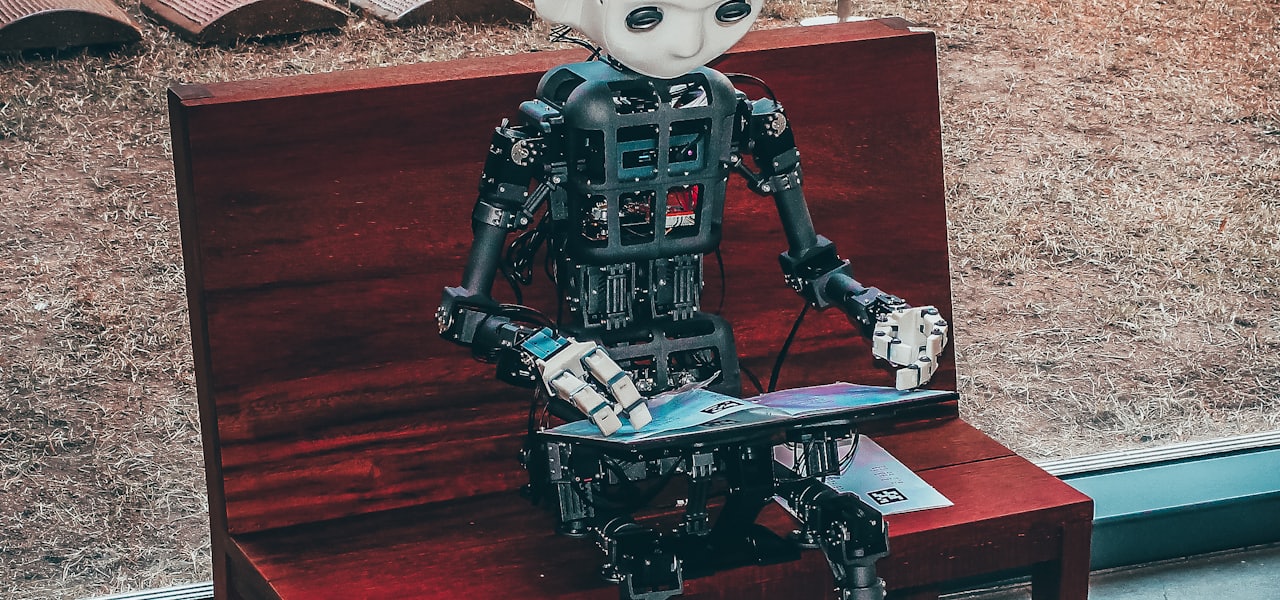
Nouvelle artificial intelligence (Nouvelle AI) is an approach to artificial intelligence pioneered in the 1980s by Rodney Brooks, who was then part of MIT artificial intelligence laboratory. Nouvelle AI differs from classical AI by aiming to produce robots with intelligence levels similar to insects. Researchers believe that intelligence can emerge organically from simple behaviors as these intelligences interacted with the "real world", instead of using the constructed worlds which symbolic AIs typically needed to have programmed into them. == Motivation == The differences between nouvelle AI and symbolic AI are apparent in early robots Shakey and Freddy. These robots contained an internal model (or "representation") of their micro-worlds consisting of symbolic descriptions. As a result, this structure of symbols had to be renewed as the robot moved or the world changed. Shakey's planning programs assessed the program structure and broke it down into the necessary steps to complete the desired action. This level of computation required a large amount time to process, so Shakey typically performed its tasks very slowly. Symbolic AI researchers had long been plagued by the problem of updating, searching, and otherwise manipulating the symbolic worlds inside their AIs. A nouvelle system refers continuously to its sensors rather than to an internal model of the world. It processes the external world information it needs from the senses when it is required. As Brooks puts it, "the world is its own best model--always exactly up to date and complete in every detail." A central idea of nouvelle AI is that simple behaviors combine to form more complex behaviors over time. For example, simple behaviors can include elements like "move forward" and "avoid obstacles." A robot using nouvelle AI with simple behaviors like collision avoidance and moving toward a moving object could possibly come together to produce a more complex behavior like chasing a moving object. === The frame problem === The frame problem describes an issue with using first-order logic (FOL) to express facts about a robot in the world. Representing the state of a robot with traditional FOL requires the use of many axioms (symbolic language) to imply that things about an environment do not change arbitrarily. Nouvelle AI seeks to sidestep the frame problem by dispensing with filling the AI or robot with volumes of symbolic language and instead letting more complex behaviors emerge by combining simpler behavioral elements. === Embodiment === The goal of traditional AI was to build intelligences without bodies, which would only have been able to interact with the world via keyboard, screen, or printer. However, nouvelle AI attempts to build embodied intelligence situated in the real world. Brooks quotes approvingly from the brief sketches that Turing gave in 1948 and 1950 of the "situated" approach. Turing wrote of equipping a machine "with the best sense organs that money can buy" and teaching it "to understand and speak English" by a process that would "follow the normal teaching of a child." This approach was contrasted to the others where they focused on abstract activities such as playing chess. == Brooks' robots == === Insectoid robots === Brooks focused on building robots that acted like simple insects while simultaneously working to remove some traditional AI characteristics. He created insect-like robots, named Allen and Herbert after cognitive science and AI pioneers Allen Newell and Herbert A. Simon. Brooks's insectoid robots contained no internal models of the world. Herbert, for example, discarded a high volume of the information received from its sensors and never stored information for more than two seconds. ==== Allen ==== Allen had a ring of twelve ultrasonic sonars as its primary sensors and three independent behavior-producing modules. These modules were programmed to avoid both stationary and moving objects. With only this module activated, Allen stayed in the middle of a room until an object approached and then it ran away while avoiding obstacles in its way. ==== Herbert ==== Herbert used infrared sensors to avoid obstacles and a laser system to collect 3D data over a distance of about 12 feet. Herbert also carried a number of simple sensors in its "hand." The robot's testing ground was the real world environment of the busy offices and workspaces of the MIT AI lab where it searched for empty soda cans and carried them away, a seemingly goal-oriented activity that emerged as a result of 15 simple behavior units combining. As a parallel, Simon noted that an ant's complicated path is due to the structure of its environment rather than the depth of its thought processes. ==== Other insectoid robots ==== Other robots by Brooks' team were Genghis and Squirt. Genghis had six legs and was able to walk over rough terrain and follow a human. Squirt's behavior modules had it stay in dark corners until it heard a noise, then it would begin to follow the source of the noise. Brooks agreed that the level of nouvelle AI had come near the complexity of a real insect, which raised a question about whether or not insect level-behavior was and is a reasonable goal for nouvelle AI. === Humanoid robots === Brooks' own recent work has taken the opposite direction to that proposed by Von Neumann in the quotations "theorists who select the human nervous system as their model are unrealistically picking 'the most complicated object under the sun,' and that there is little advantage in selecting instead the ant, since any nervous system at all exhibits exceptional complexity." ==== Cog ==== In the 1990s, Brooks decided to pursue the goal of human-level intelligence and, with Lynn Andrea Stein, built a humanoid robot called Cog. Cog is a robot with an extensive collection of sensors, a face, and arms (among other features) that allow it to interact with the world and gather information and experience so as to assemble intelligence organically in the manner described above by Turing. The team believed that Cog would be able to learn and able to find a correlation between the sensory information it received and its actions, and to learn common sense knowledge on its own. As of 2003, all development of the project had ceased.
Glossary of operating systems terms
This page is a glossary of Operating systems terminology. == A == access token: In Microsoft Windows operating systems, an access token contains the security credentials for a login session and identifies the user, the user's groups, the user's privileges, and, in some cases, a particular application. == B == binary semaphore: See semaphore. booting: In computing, booting (also known as booting up) is the initial set of operations that a computer performs after electrical power is switched on or when the computer is reset. This can take tens of seconds and typically involves performing a power-on self-test, locating and initializing peripheral devices, and then finding, loading and starting the operating system. == C == cache: In computer science, a cache is a component that transparently stores data so that future requests for that data can be served faster. The data that is stored within a cache might be values that have been computed earlier or duplicates of original values that are stored elsewhere. cloud: Cloud computing operating systems are recent, and were not mentioned in Gagne's 8th Edition (2009). In contrast, by Gagne's 9th (2012), cloud o/s received 3 pages of coverage (41, 42, 716). Doeppner (2011) mentions them (p. 3), but only to prove that operating systems "are not a solved problem" and that even if the day of the dedicated PC is waning, cloud computing has created an entirely new opportunity for o/s development ala sharing, networks, memory, parallelism, etc. Gagne (2012) adds that in addition to numerous traditional o/s's at cloud warehouses, Virtual machine o/s (VMMs), Eucalyptus, Vware, vCloud Director and others are being developed specifically for cloud management with numerous traditional o/s features (security, threads, file and memory management, guis, etc.) (p. 42). Microsoft's investment in cloud aspects of o/s tend to support that argument. concurrency == D == daemon: Operating systems often start daemons at boot time and serve the function of responding to network requests, hardware activity, or other programs by performing some task. Daemons can also configure hardware (like udevd on some Linux systems), run scheduled tasks (like cron), and perform a variety of other tasks. == E == == F == == G == == H == == I == == J == == K == kernel: In computing, the kernel is a computer program that manages input/output requests from software and translates them into data processing instructions for the central processing unit and other electronic components of a computer. The kernel is a fundamental part of a modern computer's operating system. == L == lock: In computer science, a lock or mutex (from mutual exclusion) is a synchronization mechanism for enforcing limits on access to a resource in an environment where there are many threads of execution. A lock is designed to enforce a mutual exclusion concurrency control policy. == M == mutual exclusion: Mutual exclusion is to allow only one process at a time to access the same critical section (a part of code which accesses the critical resource). This helps prevent race conditions. mutex: See lock. == N == == O == == P == paging daemon: See daemon. process == Q == == R == == S == semaphore: In computer science, particularly in operating systems, a semaphore is a variable or abstract data type that is used for controlling access, by multiple processes, to a common resource in a parallel programming or a multi user environment. == T == thread: In computer science, a thread of execution is the smallest sequence of programmed instructions that can be managed independently by an operating system scheduler. The scheduler itself is a light-weight process. The implementation of threads and processes differs from one operating system to another, but in most cases, a thread is contained inside a process. templating: In an o/s context, templating refers to creating a single virtual machine image as a guest operating system, then saving it as a tool for multiple running virtual machines (Gagne, 2012, p. 716). The technique is used both in virtualization and cloud computing management, and is common in large server warehouses. == U == == V == == W == == Z ==
GPU switching
GPU switching is a mechanism used on computers with multiple graphic controllers. This mechanism allows the user to either maximize the graphic performance or prolong battery life by switching between the graphic cards. It is mostly used on gaming laptops which usually have an integrated graphic device and a discrete video card. == Basic components == Most computers using this feature contain integrated graphics processors and dedicated graphics cards that applies to the following categories. === Integrated graphics === Also known as: Integrated graphics, shared graphics solutions, integrated graphics processors (IGP) or unified memory architecture (UMA). This kind of graphics processors usually have much fewer processing units and share the same memory with the CPU. Sometimes the graphics processors are integrated onto a motherboard. It is commonly known as: on-board graphics. A motherboard with on-board graphics processors doesn't require a discrete graphics card or a CPU with graphics processors to operate. === Dedicated graphics cards === Also known as: discrete graphics cards. Unlike integrated graphics, dedicated graphics cards have much more processing units and have its own RAM with much higher memory bandwidth. In some cases, a dedicated graphics chip can be integrated onto the motherboards, B150-GP104 for example. Regardless of the fact that the graphics chip is integrated, it is still counted as a dedicated graphics cards system because the graphics chip is integrated with its own memory. == Theory == Most Personal Computers have a motherboard that uses a Southbridge and Northbridge structure. === Northbridge control === The Northbridge is one of the core logic chipset that handles communications between the CPU, GPU, RAM and the Southbridge. The discrete graphics card is usually installed onto the graphics card slot such as PCI-Express and the integrated graphics is integrated onto the CPU itself or occasionally onto the Northbridge. The Northbridge is the most responsible for switching between GPUs. The way how it works usually has the following process (refer to the Figure 1. on the right): The Northbridge receives input from Southbridge through the internal bus. The Northbridge signals to CPU through the Front-side bus. The CPU runs the task assignment application (usually the graphics card driver) to determine which GPU core to use. The CPU passes down the command to the Northbridge. The Northbridge passes down the command to the according GPU core. The GPU core processes the command and returns the rendered data back to the Northbridge. The Northbridge sends the rendered data back to Southbridge. === Southbridge control === The Southbridge is a set of integrated circuits such Intel's I/O Controller Hub (ICH). It handles all of a computer's I/O functions, such as receiving the keyboard input and outputting the data onto the screen. The way how it usually works usually has two steps: Take in the user input and pass it down to the Northbridge. (Optional) Receive the rendered data from the Northbridge and output it. The reason why the second step can be optional is that sometimes the rendered the data is outputted directly from the discrete graphics card which is located on the graphics card slot so there is no need to output the data through the Southbridge. == Main purpose == GPU switching is mostly used for saving energy by switching between graphic cards. The dedicated graphics cards consume much more power than integrated graphics but also provides higher 3D performances, which is needed for a better gaming and CAD experience. Following is a list of the TDPs of the most popular CPU with integrated graphics and dedicated graphics cards. The dedicated graphics cards exhibit much higher power consumption than the integrated graphics on both platforms. Disabling them when no heavy graphics processing is needed can significantly lower the power consumption. == Technologies == === Nvidia Optimus === Nvidia Optimus™ is a computer GPU switching technology created by Nvidia that can dynamically and seamlessly switch between two graphic cards based on running programs. === AMD Enduro === AMD Enduro™ is a collective brand developed by AMD that features many new technologies that can significantly save power. It was previously named as: PowerXpress and Dynamic Switchable Graphics (DSG). This technology implements a sophisticated system to predict the potential usage need for graphics cards and switch between graphics cards based on predicted need. This technology also introduces a new power control plan that allows the discrete graphics cards consume no energy when idling. == Manufacturers == === Integrated graphics === In personal computers, the IGP (integrated graphics processors) are mostly manufactured by Intel and AMD and are integrated onto their CPUs. They are commonly known as: Intel HD and Iris Graphics - also called HD series and Iris series AMD Accelerated Processing Unit (APU) - also formerly known as: fusion === Dedicated graphics cards === The most popular dedicated graphics cards are manufactured by AMD and Nvidia. They are commonly known as: AMD Radeon Nvidia GeForce == Drivers and OS support == Most common operating systems have built-in support for this feature. However, the users may download the updated drivers from Nvidia or AMD for better experience. === Windows support === Windows 7 has built-in support for this feature. The system automatically switches between GPUs depending on the program that's running. However, the user may switch the GPUs manually through device manager or power manager. === Linux === Modern Linux systems handle hybrid graphics in two parts: power/control for the inactive GPU, and optional render offloading for individual applications. vga_switcheroo (in the kernel since 2.6.34) coordinates power and mux control on systems with multiple GPUs. It was designed primarily for muxed designs (hardware display switch), and on muxless laptops it is typically used only for power control. A display server restart is no longer required for offloading on muxless systems. DRI PRIME (Mesa) enables per-process render offload on muxless systems: an app renders on the discrete GPU and the integrated GPU presents the result. Users can opt in via the DRI_PRIME environment variable (e.g., DRI_PRIME=1) or desktop integration. On GNOME, the switcheroo-control service exposes the discrete GPU to the shell, adding a “Launch using Discrete Graphics Card” entry to app menus on supported systems (Wayland or Xorg), which invokes render offload under the hood. With the proprietary Nvidia driver, render offload is provided as PRIME Render Offload (supported since driver 435.xx). Distributions commonly ship a helper like prime-run or desktop menu entries that set the required environment for offloading. ==== Notes and limitations (Linux) ==== On muxless systems the internal display is hard-wired to the integrated GPU; the discrete GPU cannot directly drive that panel and instead renders offscreen for composition by the iGPU. External displays connected to the dGPU may allow direct output depending on the laptop’s wiring. Power-saving behavior varies by driver and distro defaults. Some setups need explicit configuration to power down the inactive GPU when idle. Desktop integrations (e.g., GNOME's menu item) simply opt an app into offload; they do not "auto-switch" the whole session. Users can still launch apps on either GPU as needed.
Digital inclusion
Digital inclusion involves the activities necessary to ensure equitable access to and use of information and communications technologies for participation in social and economic life including for education, social services, health, social, and community participation. Digital inclusion includes access to affordable broadband Internet services, Internet-enabled devices, access to digital literacy training, quality technical support, and applications and online content designed to enable and encourage self-sufficiency, participation, and collaboration. Related concepts include digital divide, digital exclusion and digital inequality, however digital inclusion focuses more on the strategies, policies, and programs required to address the digital divide. As many services have moved online and with the increasing use of telehealth to deliver primary care, particularly during the COVID-19 pandemic in 2020, digital inclusion, including digital literacy and internet access is increasingly regarded as a social determinant of health. Accessibility, relevance, and impact have been identified as essential elements of digital inclusion as it pertains to health information systems. "Digital inclusion is broadly defined as different strategies designed to ensure that all people have equal access, opportunities and skills to benefit from digital technologies and systems" (ITU, 2019, as cited in Carmi and Yates, 2020). Since 2020, there have been many technology companies that have begun implementing different features or roles within their companies to support breaking down the digital divide. For example, HP has announced the digital divide accelerator. This accelerator will support nonprofits in Greece, Indonesia, Nigeria, and Spain. The goal for this role is to help equip children and other people within the community to understand the skills needed to become a part of the digital community. == Background == With the increasing use of computers and the Internet in the 1990s and early 2000s concerns rose around digital equality, however this primarily focused on the physical access to technology. This gave rise to the concept of the digital divide which was originally developed to describe the growing disparity in Internet access between rural and urban areas of the United States of America. This gradually expanded to considerations of digital access between countries in what is termed the global digital divide, which mirrors many of the disparities seen within countries but on an international scale. However, with the adoption of digital technologies across most sectors of society, and the increasing diversity of technologies and programs, access and use of ICT became more complex and essential for many aspects of daily life. This led to new terminology and a second wave of research on digital inequality which has been identified as the (1) usage gap, (2) second level digital divide, (3) emerging digital differentiation, and (4) digital inclusion. == Strategies for digital inclusion == A review of the literature in 2019 found that while physical access to digital technologies and the internet continues to be a barrier to digital inclusion, digital ability and attitude were also potential barriers. Key strategies identified for improving digital inclusion are social support, direct user experience and collaborative learning/design. Education is a key aspect of digital inclusion as digital technologies have become a key means of engaging with all levels of the education system, requiring levels of digital competence for successful engagement with the curriculum. In addition lifelong learning is required as technologies, services and systems are changing constantly. Public libraries and community service providers play a key role in supporting digital inclusion through access to computers, internet connection and expertise and training. Designing for digital inclusion may also help with poor written literacy, which remains a barrier for 10% of the world's population. UNESCO has developed Guidelines for designing digital technologies in ways that could assist those who are illiterate. == Indigenous digital inclusion == Digital inclusion is a critical issue for many Indigenous communities across the globe, many of whom lack access to adequate resources. The Australian Government has set a National Closing the Gap target for Aboriginal and Torres Strait Islander people to have equal levels of digital inclusion by 2026. Many people on tribal land and in Native Hawaiian land struggle with the technology gap. The Native Entities Capacity and Planning Grant Program has $45.3 million available to help address these challenges and empower Indian Tribes, Alaska Native entities, and Native Hawaiian organizations. Some of the impacts so far are in the education and workforce development and healthcare access through telehealth.[13] == Measuring digital inclusion == The Australian Digital Inclusion Index (ADII) is a research project which has been tracking digital inclusion throughout Australia since 2016. It uses survey data to measure digital inclusion across three dimensions of access, affordability and digital ability. == The Future of Digital Inclusion == On February 16, 2021, a global dialogue within the United Nations (UN) took a look at the future of digital inclusion. Through the adoption of the 2030 UN Agenda for Sustainable Development, Member States made a commitment. They pledged to "leave no one behind." By 2030, the UN's goal is to close the digital divide by providing access to the Internet and mobile technologies for all nations and peoples and for all segments of society. The UN sees the crisis of too many people in our global society still living unconnected and how the digital divide remains a challenge that must be addressed. == Gaming == The Xbox Adaptive Controller is a groundbreaking example of digital inclusion, designed to make gaming more accessible to people with limited mobility. Developed by Microsoft, it features large programmable buttons and ports that connect to a wide range of external devices like switches, joysticks, and mounts, allowing users to customize their gaming experience based on their unique needs. By removing traditional physical barriers to gameplay, the Xbox Adaptive Controller empowers more people to participate in digital entertainment, promotes equal access to technology, and fosters a more inclusive gaming community. == Digital inclusion advocacy groups == Australian Digital Inclusion Alliance National Digital Inclusion Alliance (US)
Digital on-screen graphics by country
Digital on-screen graphics by country are the varying logos and differences of digital on-screen graphics in different countries and regions. == Overview == Digital on-screen graphics (DOGs; also called a digitally originated graphic, bug, network bug, on-screen bug, or screenbug) are almost always placed in one of four corners: the top left, the top right, the bottom left, or the bottom right. There are few exceptions to this rule: most notably, Saturday! in Russia, which places their DOG in the top center. Many news broadcasters, as well as a few television networks, also place a clock alongside their bug. In the United States, Canada, Australia, and New Zealand, DOGs may also include the show's parental guideline rating. In Australia, this is known as a Program Return Graphic (PRG). It has become common to place text above the station's logo advertising other programs on the network. In many countries, some TV networks insert the word "live" near the DOG to advise viewers that the program is live, rather than pre-recorded. During televised sports events, a DOG may also display game-related statistics such as the current score. This has led people in Canada and the United States to refer to such a DOG as a score bug. In many countries, DOGs are removed in non-program sections such as commercials and program trailers, but TV channels in some other countries have retained in full color or instead replaced them in either of these sections or in both sections (like Turkey, Indonesia, Italy, the entirety of South Asia, Vietnam, Taiwan, and Russia). == MENA == === Arab world === Arabic TV logos are placed in the top-right and top-left except for Al-Jazeera, whose logo appears on the bottom-right of the screen. Some Arabian TV stations hide their logos during commercial breaks and promos/trailers, such as Dubai TV, Dubai One, Funoon, the Egyptian CBC and Nile TV networks, ART Hekayat, ART Hekayat 2, Iqraa, and Al-Jazeera. Abu Dhabi TV and MBC1 initially had their logos at the bottom-right corner from their launch until the mid-2000s, when they were moved to the top-right corner. === Iran === Iranian broadcaster IRIB introduced DOGs in early 2000s. Unlike other Middle Eastern nations that introduced DOGs on their TV networks in 1990s, Iran was very late in this practice. Almost all Iranian TV channels display DOGs at top-left corner of the screen. The few exception is IRIB-owned channels remove DOGs during news broadcasts. === Israel === In Israel, Television DOGs were first introduced in 1991. Israeli channel watermarks most often appear on the top left or the top right corner since Israeli cable and satellite-based services often have the channel description and programming (OSD) on the bottom of the screen. Most channels have an opaque, full-color watermark, though exceptions exist, for example Channel 9, which displays a blue-tinted semi-transparent logo. In ad breaks, it is required to replace the channel watermark with another symbol – sometimes on the other edge of the screen – indicating there are ads at the moment. The Israel Broadcasting Authority, whose channels placed their logos in the top left corner, ceased broadcasting in May 2017. The new public broadcaster, the Israeli Public Broadcasting Corporation, displays its logos at the top right instead. The erstwhile Channel 2 as well as its successors, Keshet 12 and Reshet 13, also use the top right corner. However, Channel 10 used the top left corner before rebranding to Eser (Literally "Ten") in 2017 and simultaneously moving its logo to the top right (Not long after, in January 2019, it ceased broadcasting as it merged with Reshet 13). Channel 14 as well as its predecessor Channel 20 use the top right corner as well. The Knesset Channel, however, uses the top left corner. === Morocco === The SNRT and 2M And Al-Aoula Uses permanent on-screen DOGs for their TV channels. In contrast, other channels such as Medi 1 TV hide their DOGs during commercial breaks. == Asia == === Brunei === Radio Television Brunei introduced DOGs in 1994. Like TV channels from neighbouring Malaysia, all DOGs are removed during advertisement breaks. === Cambodia === Cambodian TV channels introduced DOGs in 1995. Like Thailand, all logos are full-color and displayed on the top-right corner of the screen. Some channels such as TV5 hide their logos during commercial breaks. Hang Meas HDTV Logo on the top-left corner of the screen, CTN (Cambodian Television Network), MyTV, Bayon TV, PNN, Logo on the top-right corner of the screen. === China === TV stations in mainland China always place their logo (usually semi-transparent and sometimes animated) in the top-left corner of the screen in full-color or grey-scale. Regardless of the content being broadcast (program or advertisements), some channels like Phoenix Television hide their logos during commercial breaks; although in some rare cases, the DOG may be placed elsewhere to avoid covering the score bug during the broadcast of a sporting event. China introduced logos in 1983 on the bottom-left corner of the screen, but they were used only during commercial breaks and clock idents. Later China Central Television (CCTV) introduced permanent DOGs for all programs in 1992, on the top-left corner of the screen. China also displays a clock on top-right corner of the screen for 1 minute between 59:30–00:30 & 29:30–30:30 time in transition between programs. === Hong Kong === Hong Kong TV introduced DOGs in 1994. Hong Kong DOGs can be either of full color or semi-transparent and (except for RTHK 31) always be hidden during commercial breaks. Television Broadcasts Limited (TVB) placed their logos at the top-right corner of the screen while now-defunct Asia Television and other channels placed their logos at the top-left corner of the screen. Sometimes, weather information, date, and time clocks had been used alongside DOGs in news programs, continuity & live broadcasts. === India === The first on-screen logo in India was introduced in 1984 by DD2 Metro (now DD News). It was white and slightly transparent. All Indian TV channels have on-screen logos. They are always full-colors, never transparent, and they are almost never removed during commercial breaks (though the channels of the South Indian Sun TV Network did so until 2015). The great majority of Indian TV channels place their logos in the top right corner of the screen, though there are exceptions. The corner used may be broadcaster-dependent. Among the big national broadcasters: Channels from the Sony network always use the top right corner, without exception. Star channels also use the top right, with the exception of National Geographic and Nat Geo Wild, which use the top left corner in line with their international counterparts. Past exceptions include The History Channel, whose logo was placed in the top left until it rebranded to Fox History & Entertainment in 2008; the now-defunct Channel V, which used the top left between 2013 and 2016; and Nat Geo People, Nat Geo Music and BabyTV, were withdrawn from India in June 2019. TV18 and Viacom18 channels use the top right corner as well, with the exceptions of regional-language movie channels (e.g., Colors Kannada Cinema and Colors Gujarati Cinema) as well as Colors Super, which have shown their logos at the top left corner since 2018; and VH1, which has always used the bottom right corner. Also, CNBC-TV18, CNBC Awaaz and CNBC Bajar use the bottom right. Moreover, MTV showed its logo in the top left corner until 23 April 2018, when it was moved to the top right (its HD version, launched in 2017, has always used the top right). Unlike most other major networks, the Zee Network's non-news channels containing 'Zee' in their name display their logos at the top left corner and not the top right. This has been the case since 15 October 2017, when almost all the Zee-branded TV channels of the Zee network rebranded with a new logo and, in many cases, a new graphics package and look. Before then, the logos were shown at the top right, as with other broadcasters. (News channels' logos—i.e., logos of channels owned by Zee Media Corporation—stayed put at the top right corner, with the exception of WION, which uses the bottom left.) All the major Zee-branded channels—such as Zee TV, Zee Cinema, Zee Café and the regional-language channels like Zee Tamil, Zee Telugu, Zee Marathi and Zee Bangla—show their logos at the top left; moreover, the Odia-language channel Sarthak TV rebranded to Zee Sarthak and moved its logo to the top left. Among the Zee channels not containing the word 'Zee' that moved their logos to the top left during the big rebrand in 2017 was English movie channel Zee Studio; when it was renamed to &flix on 3 June 2018, the logo remained at the top left. Moreover, Hindi movie channel &pictures has always shown its logo at the top left since its launch in 2013. However, &privé HD, Zee's other English movie channel, and Hindi entertainment channel &TV place the
Frictionless sharing
Frictionless sharing refers to the transparent or automatic dissemination of user activity across social media platforms, typically without requiring explicit action from the user each time content is shared. The concept gained prominence in 2011 after Mark Zuckerberg announced a series of new features for Facebook at the F8 developers conference, framing the changes as enabling “real-time serendipity in a friction-less experience.” == History and concept == Before 2011, the term “frictionless sharing” was occasionally used in academic and technical contexts to describe sharing of resources with minimal effort, such as through social bookmarking or Creative Commons licensing to reduce barriers to reuse of research data. The concept took on a broader cultural meaning when Facebook introduced its Timeline interface and new “social apps” in 2011. These features enabled third-party applications to automatically publish user activity to the platform—effectively shifting sharing from a deliberate act to a passive process. For example, integrating music streaming service Spotify meant that any song a user listened to could automatically appear in a Facebook “Ticker,” allowing friends to see the activity and click through to play the song themselves. == Zuckerberg’s vision == Zuckerberg articulated a vision of a Web in which sharing occurs by default rather than by choice: “You read, you watch, you listen, you buy—and everyone you know will hear all about it on Facebook.” This “frictionless” model assumes ongoing consent after an initial opt-in. Once users connect an app to their profile, any future activity with that app may be automatically shared. This shift from intentional posting to ambient sharing represented a significant evolution in how personal data is distributed online. == Criticism and debate == Many commentators and users have raised concerns about frictionless sharing. While some criticism centers on online privacy, others focus on how automatic updates can flood news feeds and erode the social value of sharing. Critics argue that when sharing becomes automatic, it dilutes the personal curation that makes social media exchanges meaningful. According to Slate, this approach risks “killing taste,” because users typically choose to share only select content they find worth highlighting, rather than everything they consume. AL.com similarly observed that the frictionless model encourages over-sharing, overwhelming both users and their networks with minor or trivial activities. For example, integrating multiple platforms—such as Twitter, Foursquare, Pinterest, Spotify, and others—can create an incessant stream of updates that some users may find intrusive or irritating. This can lead to what critics describe as “narcissistic” or noisy timelines, potentially undermining the “social” nature of social media. == Business model and data implications == For Facebook, frictionless sharing offers clear business advantages. More frequent and detailed sharing provides valuable data that can be used to refine targeted advertising and personalize content delivery. The model also encourages users to spend more time on the platform, reinforcing its position as a central hub of online social activity. Other technology companies have experimented with similar approaches. Google has introduced forms of cross-platform integration that facilitate automatic activity sharing, though with a more explicit opt-in structure compared to Facebook. This approach has been described as “friction with consent,” allowing users to manually enable or disable integrations on a per-service basis.